Phone: +254 700 524589 | +254 782 524589 Email: [email protected]


Certified Secretaries, commonly known as CS, is a kasneb-examined professional qualification that trains people to manage corporate governance, compliance, and company secretarial practice. It’s also one of the most overlooked career paths in Kenya — overshadowed by the usual CPA-or-law fork in the road that most students are pushed toward straight out of high school.
That’s a shame, because the law itself makes CS professionals indispensable: every registered company in Kenya is legally required to have a certified secretary. Yet ask around and most people genuinely don’t know this career exists, let alone what it pays or what it takes to qualify.
What Does a Certified Secretary Actually Do?
A Certified Secretary sits at the intersection of law, governance, and business management. The role isn’t about taking minutes in a back office — it’s about keeping a company on the right side of the law and steering its boardroom decisions toward sound governance.
In practice, a CS professional is the one who makes sure a company’s statutory and compliance obligations are met, ensures board decisions are implemented correctly and legally, advises directors on governance best practice, and increasingly, conducts governance and compliance audits for organizations that need an outside check on how well they’re run.
This combination — part legal advisor, part governance strategist, part administrator — is exactly why the qualification is in demand at both county and national government level, as well as across the private sector.
Why So Few People Know About It
Part of the reason CS stays under the radar is that career conversations in Kenya still default to a short list: medicine, law, engineering, accounting. CS doesn’t fit neatly into any of those boxes, even though it borrows from several of them.
Another reason is that the qualification is mandatory rather than optional for companies — which makes the demand for certified secretaries structural and ongoing, not dependent on hype or trend. Quiet, steady demand doesn’t generate the same buzz as a viral career story, but it’s often the more dependable bet.
What It Takes to Qualify
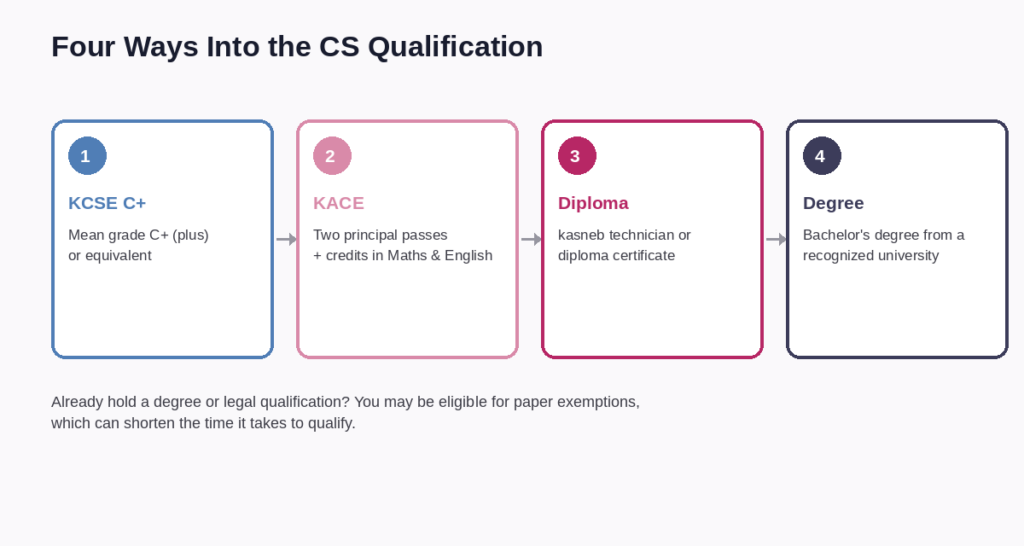
The CS qualification is examined by kasneb and structured in stages, so you don’t need a law degree to start. Entry requirements include any of the following: a KCSE mean grade of C+ (plus), KACE with two principal passes, a kasneb technician or diploma certificate, a degree from a recognized university, or an IGCSE with a C in six subjects including English and Mathematics.
The course covers a wide span of subjects across its levels — organisational behaviour, commercial and company law, public finance and taxation, financial management, corporate secretarial practice, governance and ethics, and strategic management, among others. Each level typically takes a few months to complete, with kasneb exams sitting three times a year, so the full qualification is realistically achievable within a couple of years of consistent study.
Degree holders and legal professionals are often eligible for exemptions on certain papers, which shortens the path considerably for people coming from a relevant academic background.
Why It’s Worth a Second Look
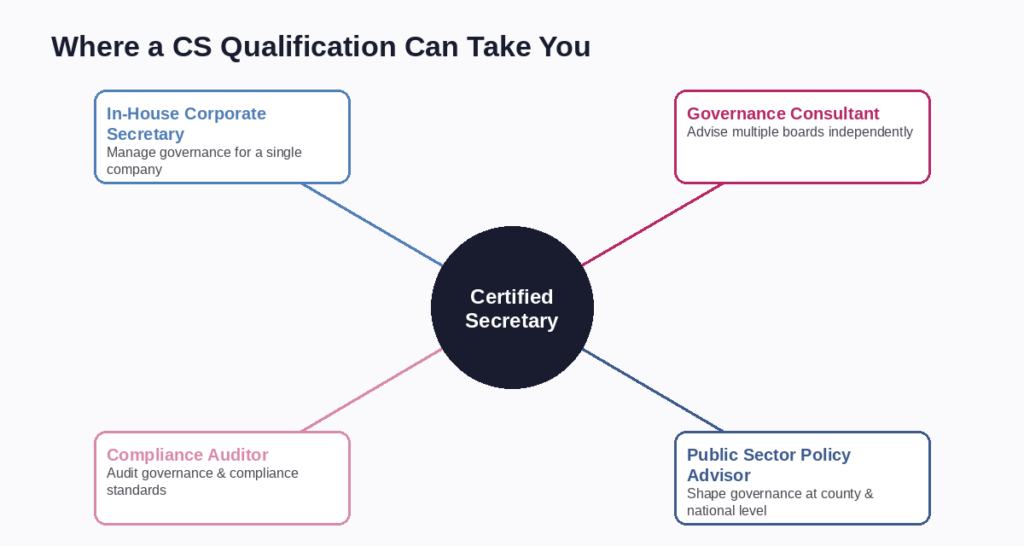
Three things make CS genuinely worth considering as a career path. The legal requirement for every registered company to have a certified secretary means the demand isn’t going anywhere. The role itself sits in governance and compliance — an area gaining more attention, not less, as regulatory scrutiny on Kenyan businesses increases. And the qualification is flexible enough to lead in multiple directions: in-house corporate secretary, independent governance consultant, compliance auditor, or policy advisor in the public sector.
For someone who enjoys law and structure but doesn’t want the years-long commitment of a full law degree, or for an accountant or administrator looking to move into governance, CS offers a credible, recognized route in.
Getting Started
If this sounds like a fit, the practical next step is enrolling in a kasneb-accredited CS program. Traction School of Governance and Business offers the CS course with intakes aligned to the kasneb exam calendar, structured study material, and support from lecturers experienced in governance practice.
Kenya’s best-kept career secret doesn’t have to stay a secret. If governance, law, and business strategy all interest you, CS might be the qualification that finally ties them together.
Learn more about the CS course at Traction School of Governance and Business.